

What To Do When You're Getting a Puppy 🐾
Practical advice for navigating the chaos of puppyhood (with gratuitous puppy pics!)

A year after losing our first dog, Walter, we welcomed home a little ball of energy and entered puppyhood again after more than 13 years.
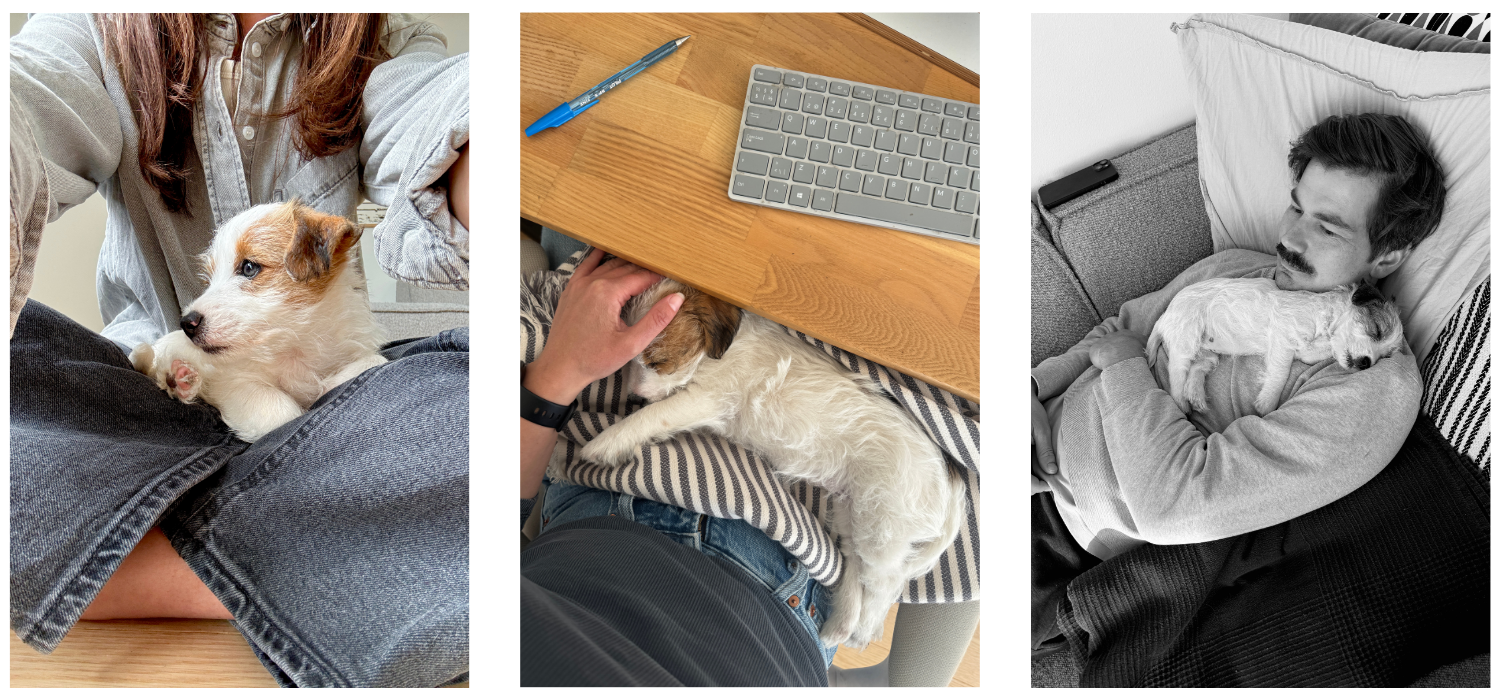
A lot has changed in the years since we got our first dog — and even in the 9 years since we were fostering puppies — a two year period during which we were in and out of the puppy phase nearly a dozen times. While I felt fully aware of what puppyhood requires as far as time and energy, I wasn’t fully prepared for learning an entirely new approach to training or navigating the complex emotions of bringing home a dog that wasn’t “our” dog.
Our precious girl Murphy June is now five months old, and this is what I’ve learned so far….
Quick note on links: I generally try to avoid using Amazon links, but I’ve included some in this post because it’s the most universal place to find some of these products. I encourage you to try searching the product name and see what other websites carry it or try to find the item locally when possible.
🧡 Knowing When You’re Ready
I don’t think there’s a clear-cut answer on how soon you should get another dog, if you want one. Learning more about grief, I understand why many people feel compelled to get another dog really quickly — you have formed all those neural pathways related to caring for your dog over the years, and when they are gone those neural pathways firing with no one to actually care for are a constant reminder of the grief. Bringing in another dog helps ease that discomfort.
But in my experience, if you push past that discomfort for a few months, you can really experience the physical loss of your dog without the distraction of your brain — if that makes sense. And in time, you’ll be feel comfortable in your dog-free life and can enjoy the reduced responsibility and free time. Personally I am really glad that we had an entire year to grieve Walter and be dog-free — it reinforced what we love about having a dog, and made us feel really intentional in our choice to bring another one home.
In short, know that your brain expects there to be a dog in your life, and it takes time for your brain to rewire. This can often drive you to get another dog before you’re truly ready, so try to be conscious of that.
👶🏻 Dogs are Babies (fight me)
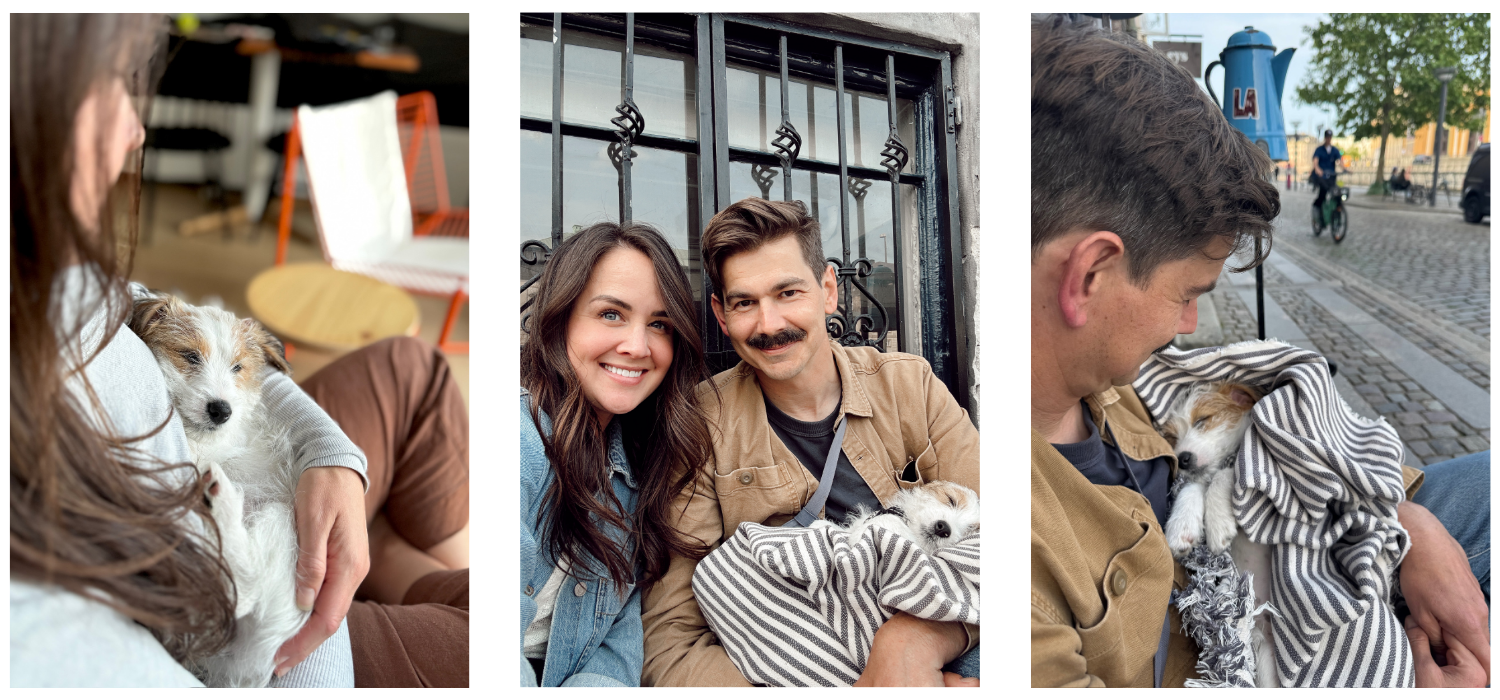
I think one of the biggest differences in our approach to puppyhood this time around is that we’re not letting society make us feel bad about treating our puppy like a baby.
They are a baby. An animal baby, of course, but still a baby.
And no I’m not trying to convince you that dogs are human babies — there are very clear differences.
But we do such a huge disservice to both dog owners and (especially) to dogs when we shame people for treating them like babies.
A puppy cannot be left alone for very long (honestly 15-30 minute increments at first), they might not sleep through the next for several weeks or months, they might not eat on their own and require hand-feeding and careful monitoring for weight gain and allergies, they need a schedule and can fly off the handle if you veer from it, they get overstimulated, occasionally need to be snuggled and given attention, and most importantly — they deserve autonomy and respect. They are at risk of many of the same things a newborn is: falling or being dropped, choking, asphyxiation, and a long list of other accidents or injuries.
And their parents are often over-stimulated, sleep-deprived and stressed — but in a world that has very little sympathy for them, and where you aren’t likely to have people offer to stop by and give you a break, cook a meal, or be understanding when you’re exhausted at work.
Just like disenfranchised grief — the compounded grief pet-owners experience trying to navigate loss in a world that doesn’t really accept it — pet parents often feel overwhelmed by the stress of puppyhood because our families and communities don’t support us in the same way they would for a human baby.
So this time around we’ve leaned into the fact that she is a baby, and aren’t allowing anyone (society or otherwise) let us feel bad about treating her like one. She needs a schedule. She has designated nap times. She has melt downs. She needs certain amounts of food at certain times. We’re tired, unable to be away from home for extended amounts of time, overstimulated, and juggling work while raising a little one.
🏠Preparing Your Heart and Home
To prepare your heart you need to recognize that this is going to be a different dog and be honest with yourself about what it will be like to have a different dog in your home.
For example, if the calm, steady presence of your previous dog was a source of emotional/nervous system regulation for you, you might find that a puppy is very much the opposite of that. You likely attached to your older dog because of the way they helped you recalibrate (you know the feeling of calm that washed over you when your dog curled up next to you on the couch? That was your nervous system resetting), and it might be a while before your puppy is able to support you in the same way. Knowing that you’ll need to navigate months (or years) or training before you reach that point can help you enter puppyhood with realistic expectations.
If you know your dog was a form of emotional support, you might also want to explore ways to regulate on your own so that your dog is not your only source of comfort. For example, therapy, breathing exercises, tapping, or journaling are all great ways to self-regulate and are habits you should establish before introducing a dog.
To prepare your home for a puppy, there are a few simple guidelines I’d suggest:
Collect (or purchases) some small jars with lids and place one in each room of your house with a collection of treats and/or kibble. This way you always have rewards on hand when your dog is doing a desired behavior.
Put away rugs and remove items that your puppy might like to chew on (textured baskets, long curtains, shoes, etc.) to make your life easier, remove tempatation, and set them up for success.
Designate a “puppy area” where your puppy can have alone time and decide how you’ll section that off.
Purchase a crate and, if needed, a puppy gate. We loved having a long, flexible gate that could be placed against a wall to make a large play pen, or stretched across a large doorway to close off entire parts of our home. We got one from a friend but this one is similar. Note: this free-standing type of gate might not be realistic for larger breeds.
Although metal crates are often recommended, I really love having a soft-sided crate that opens on the top and at least two sides. This makes it easy to keep next to your bed and be able to see or assist the puppy if needed with minimal disruption. We have this one.
⏱️Division of Time and Labor
Because society tells us not to “treat a dog like a baby”, many couples who bring home a puppy skip the vital step of discussing the division of time and labor that a puppy requires.
Which is a massive mistake, because it’s a massive commitment.
And admittedly we kind of did this the first time around — we were 26. My husband had just started a new job and was in a pretty intense 6-month training period. I was working full-time from home. Naturally, most of the dog responsibilities fell on me.
This time we’ve done it way differently. We have her three daily walks split up between the two of us so that we each have free mornings. We take turns working from home with her every other day — and on the days Josh is home with her I leave so that they have time at home alone together.
I think this has been vital not only because it has allowed them to form a great bond — but also because it has given Josh the chance to experience, respond to, and solve every puppy issue. Potty accidents. Puking. Energy bursts. The yips. Chewing. Biting. Barking through a meeting. He has been given the time and space to develop his paternal instinct so that we don’t perpetuate the myth of maternal instinct (that’s another post all its own 😆).
🎒 Build a “Pup Pack” (and thank me later)
Next up, is building a “Pup Pack” and I give credit for this idea to Josh who put it together before Murphy even arrived. This is a small bag you keep by the door that is always packed with what you need for a walk or short outing. Think of it as a “go bag” for your dog.
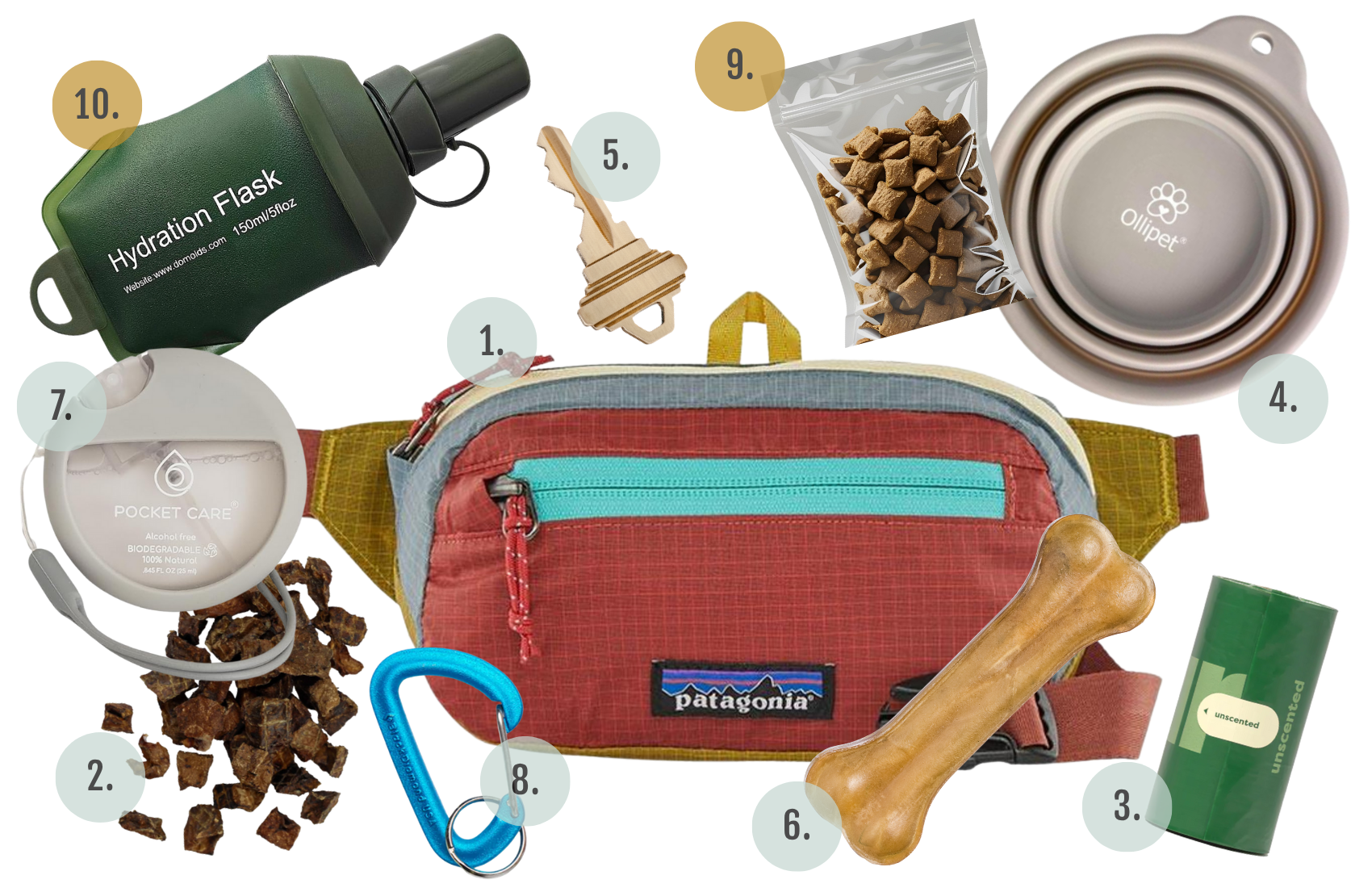
This is one of the best things we’ve done this time around — not sure how we survived before. Here’s what is in our “Pup Pack” -
#1 We repurposed a Patagonia chest pack that we’d had for years.
#2 We use the small front section for storing training treats and always keep it loaded.
The larger compartment has:
#3 A roll of poop bags
#4 This collapsible 250 ml (8 oz) silicone water dish. Similar on Amazon.
#5 Spare key for your home (easy to forget your keys when you’re rushing out the door with a puppy who needs to pee, so this is a great spot for a backup!)
#6 A small chew toy or treat that can entertain your dog for 5-10 minutes.
#7 Hand sanitizer — you can find flat or compact ones that fit well. This one is on Amazon.
#8 Having a carabiner hooked onto the strap can also be a helpful addition, in case you need to hook your leash around a table or even your own leg to keep your dog secure.
We also have these two items that fit in the bag nicely. They aren’t always in the bag, but are easy for us to grab if we are going on a longer outing (ex. to a patio, or on a bike ride). They hold a small amount of water and food — it’s just meant to bridge a gap if you get stuck somewhere and need it.
#9 A small plastic bag with a small portion of dog kibble for emergencies.
#10 This 4 ounce collapsible HydroFlask — this is just meant to be an emergency supply of water so a small amount works just fine.
This is all “sized” for a small dog. The bigger your dog, the larger your bag will likely need to be.
I’d love if a bag like this was offered as a product (dog brands, are you listening?), with a bag created from a waterproof material, a front compartment for treats that is lined and air-tight, and a built in area that dispenses the poop bags out the side so you don’t have to unzip the bag to retrieve one.
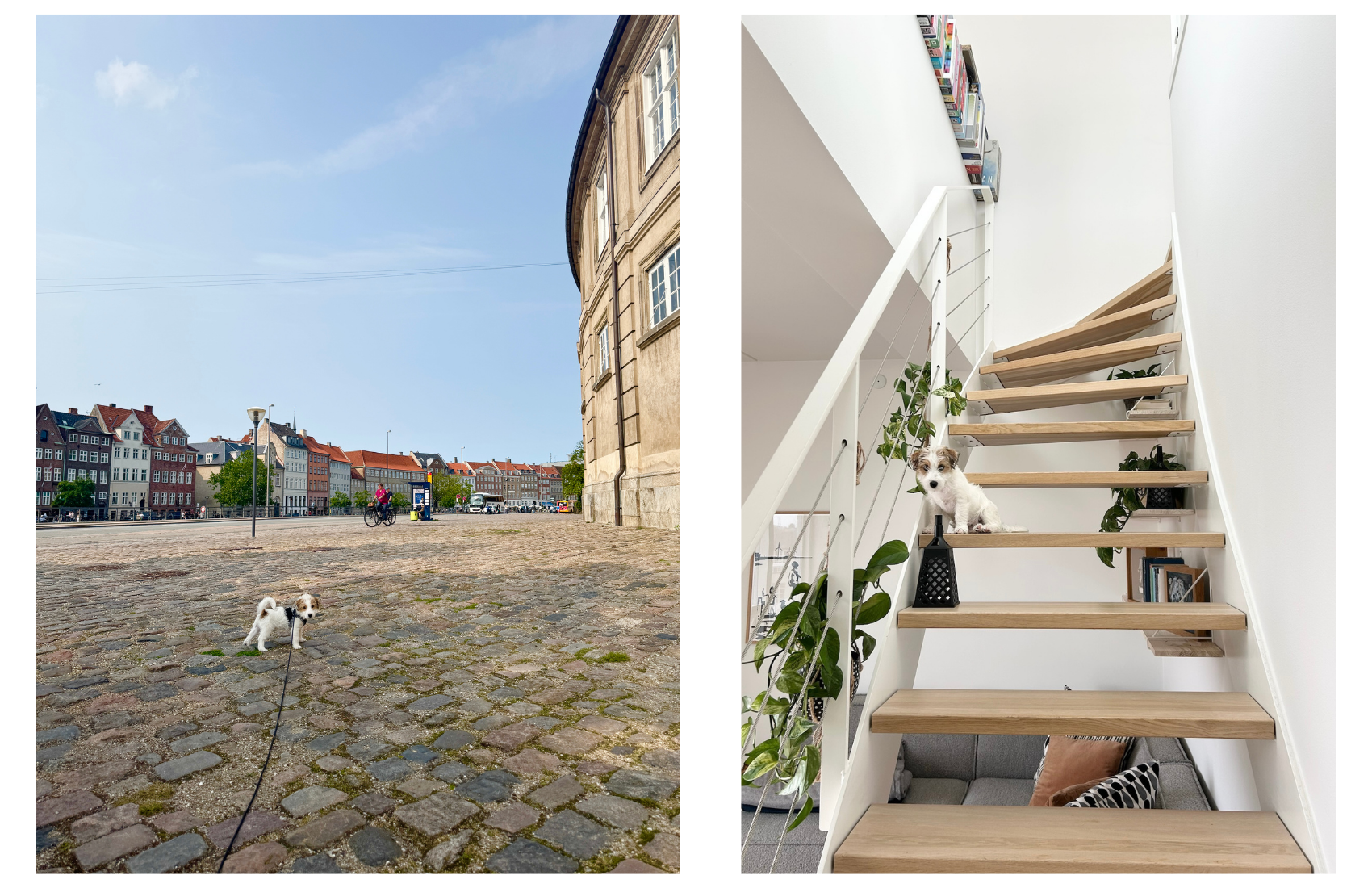
🧠 Puppy Neurology
Before we brought Murphy home, we both read the book Puppy Brain by
and found it really helpful and insightful.She explains puppy development in different stages and stresses the importance of taking advantage of your puppy’s most “neuroplastic” period, which is their first 4 months of life. This is when their brain is able to absorb new experiences and quickly categorize them as “safe” or “scary”.
You want to be actively introducing your puppy to all the things they’ll encounter in their life with you (noises! sites! sounds! people!), building a solid foundation of basic training, and establishing a strong bond with them.
I’d encourage you to read the book, but a couple of my favorite concepts are summarized below.
👽 The Little Alien in Your House
One concept from the book is called “the little alien in your house” and its something we have used since bringing Murphy home.
The general idea is to view your puppy as a little alien, and at the end of the day think about how this alien would report life with humans back to her alien friends.
We would typically do this in bed at night and reflect on Murphy’s day and how she would interpret things. For example, if the puppy was barking and you would then look at her, pick her up, or give her a treat or toy to distract her, she might tell her alien friends something like “The humans love it when you bark. They turn and look right at you and then get all excited and say loud words. Eventually they throw a treat your way!”
This makes it easy to recognize that although you think you’re telling your puppy what you don’t want her to do or redirecting her, since she speaks a different language she interprets hat attention as being positive. Instead, if you ignore her or even leave the room, her message might be more like “When you bark, the humans can’t even hear you. If you bark too much they leave the room and that makes me sad.”
This has been really helpful — and has even helped us identify how we accidentally reinforced some of our first dog’s negative behaviors.
📊 Puppy Layering
Living with a human and being a good companion will require your puppy to learn many new habits and routines. This can be a lot for a dog — no matter their age — and we can help them by never expecting them to jump straight into a “full” experience, but rather introduce it to them in layers.
Start by making a list of all the things you’ll expect your puppy to be okay with or be part of. This can be something you do long before you even decide to get a dog, as it can help inform what breed/age/size of dog might be the right fit for you.
With that list you can then work backwards with each activity and identify the different “layers” you can introduce your puppy to.
For example, since we don’t own a car we knew Murphy would need to be able to ride in a bike basket. This isn’t a skill that a dog just has, and can be scary! So these were the layers we used:
We got a bike basket installed before Murphy arrived
We detached the basket and kept it in the house. We turned it on it’s side and placed a small cushion in it so she could use it as a bed in her first days and weeks with us.
After she got comfortable sleeping in the basket on it’s side, I would place her in it with it tipped up and give her treats.
Once she would comfortably sit in the basket, I would clip her to the tether in the basket (we just added a rope with a clip on the end) and slowly walk around our apartment while carrying the basket.
Next we started leaving the apartment and walking outside with her in the basket.
Then I practiced putting her in the basket when it was attached to my bike, then taking her out.
Once she was comfortable sitting in the basket when it was on my bike, I’d just walk my bike (not ride it) around our courtyard. I could easily stop and give her treats or pet her.
Then I started going for short rides in quiet areas with limited distractions.
Then 5 minute rides, 10 minute rides, etc.
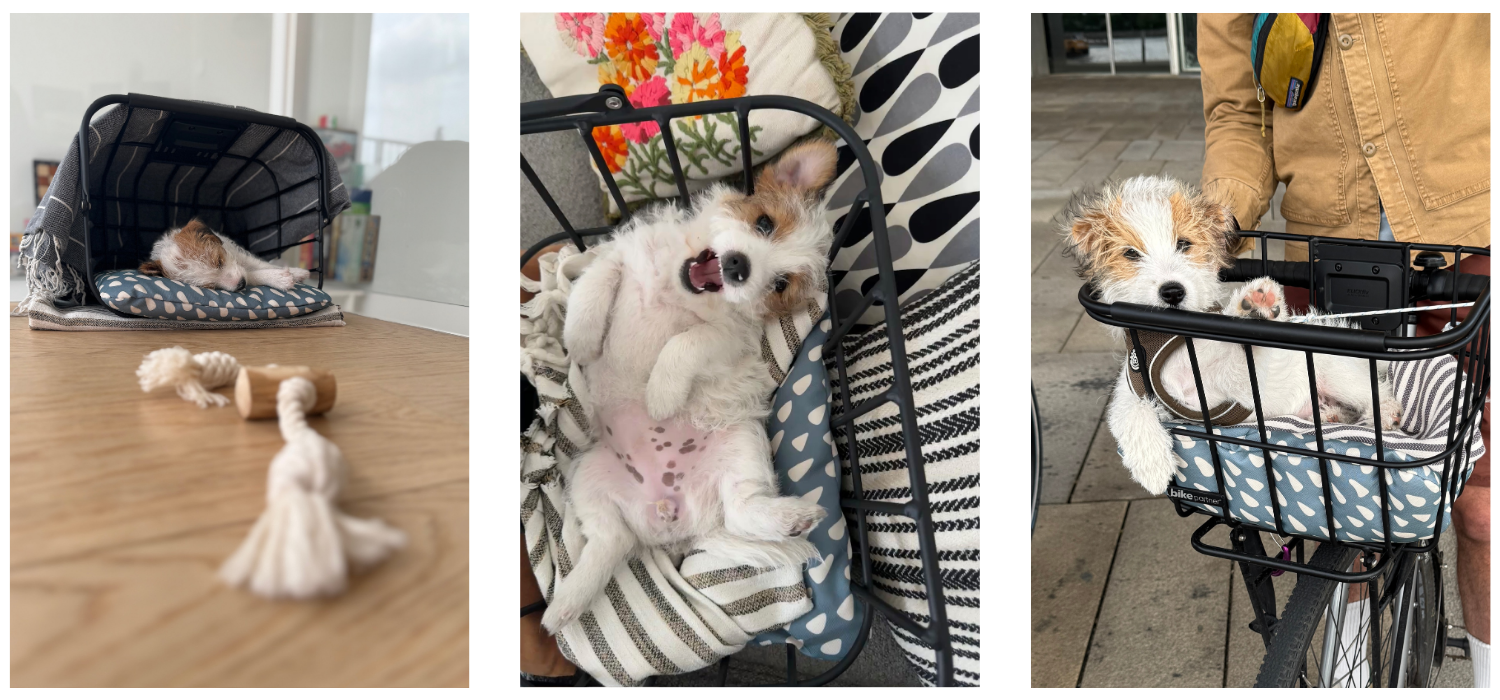
I introduced these layers slowly over the course of about two weeks. Anytime she showed discomfort with a new layer, we went back to the previous one, then tried again.
You can (and should!) do this with basically every new experience your puppy will have: walking on a leash, brushing their teeth, taking a bath, riding in a car, going to the vet, watching a specific sport or activity, etc. While it takes more time, it helps ensure you have a confident dog who enjoys these activities and knows how to handle them, rather than a dog who is fearful or reactive in that situation or who gets deemed “not able to ride in a car”, etc.
Do this not just for activities, but think of sounds your puppy will hear on a regular basis (for example, the vacuum, the hair drier, dice being shaken on a table, your doorbell etc.). Here are examples for how you might layer some of these:
Doorbell: create a recording of your doorbell using the audio app on your phone. Start playing it a few meters away from your dog at a low volume and do not react to it. If your dog barks, try reducing the volume or moving it further away until it doesn’t evoke a reaction. Continue to expose your dog to the sound by moving it closer/increasing the volume until you are able to play it loudly next to your dog without a reaction.
Vacuum: start with your puppy in the safe area (crate, pen etc.) and vacuum in the other room (maybe with a door shut if the noise is still loud). Once they are okay with that, try bringing the vacuum where they can see you and roll it around the room with it off (so they get used to the shape, the motion, the sound of it on the floor). Next, run the vacuum with them in the room, but start with it far away and slowly work on getting it closer to them until they do not react.
😫 Make a Troubleshooting Guide
When your puppy has a meltdown and is being completely unreasonable (nipping, barking at you excessively etc.) it can be helpful to work through a checklist like this.
Has your dog had:
🐕 Physical stimulation (a walk, run, time at the dog park, playing with another dog, an active game like fetch or tug-of-war, etc.)
🧠 Mental simulation (practicing their training/tricks, a puzzle game, a difficult licking treat, hide-and seek, scent work etc.)
👀 Your attention (eye contact, petting, cuddles, or perhaps 1-on-1 time with training or a relaxing game)
🥩 Access to food (as opposed to just treats)?
💦 Access to water?
🦴Something to entertain themself with (a good chew or toy)?
💤 Access to a quiet space where they can regulate and rest?
I would print this out or write it down and keep it right where you can see it as soon as you get a puppy. Because a puppy can be challenging and when we’re stressed out ourselves, its hard to think logically about what our puppy might need.
I cannot tell you how many times over the past 3 months we have been at the end of our ropes with a whining puppy and then realized she hasn’t had food or found that just laying on the floor and letting her crawl on us ultimately calms her down. It’s so helpful! Working through this checklist will solve the issue 95% of the time and if all else fails, your puppy likely needs some forced alone time in their crate or safe area.
💤 Understand their Sleep Needs and Cycles
Most people don’t realize that puppies under 4 months old need upwards of 18-20 hours of sleep per day! Even an adult dog sleeps at least 12-14 hours a day. Not getting enough sleep doesn’t just make them unruly little devils that are impossible to manage — but it can impact their development and growth!
Sleep is when your puppy is consolidating memories and storing all those experiences that you are slowly layering for them. Ensuring they are getting adequate rest is an important part of ensuring they are also absorbing what you are teaching them AND having time to grow their bones and develop their muscles.
Understanding this should help inform the types of activities you undertake with your puppy — being out of the house for more than 1-2 hours at a time in their first 12-16 weeks is challenging — as they need a calm, quiet, familiar place where they can sleep.
You should also avoid waking up a dog who is twitching or “dreaming”. This is when dogs are in their deepest stages of sleep, and for puppies this is when they are doing all that important memory consolidation and tissue repair.
🦴 Fav Tools and Gear
Barkio app - This is a video monitoring app that will allow you to watch your puppy when you are in the next room or away from home. We both have it installed on our phones + on an iPad. We keep the iPad pointed at Murphy’s crate when she is napping, and are able to see if she wakes up.
The app will also let you speak to your pet or turn on the camera if you want them to see you. You can also pre-record messages or commands so you can play them remotely. We really love this app and have found it really helpful for crate training! Instead of rushing in as soon as she wakes up from a nap and barks, we are able to see that she’s often just fine and will only fuss for a minute or two before falling back asleep for another 1-2 hour sleep cycle.
I recommend turning down the sensitivity for motion and noise so you aren’t getting a notification every time your dog moves. I’d also suggest turning off notifications if you’re in a situation where you have to be away from your dog for a specific period of time, and just check in when you can. The app creates an activity log, complete with recordings, so it’s easy to check in and see what you missed. Learn more here.
Loop Earplugs - Any earplugs will do but I HIGHLY recommend having some on hand for when your puppy in in a bark or yippy phase. You need to be able to ignore them and earplugs really help, especially if you are sensitive to loud noises or over stimulation. I got a pair of LOOP earplugs during the pandemic because we were both working from home in the same room and wearing my noise-cancelling headphones too often was causing me to develop tinnitus (ringing in the ear). These are super comfortable and work really well.
Puppy Brain - We both read this book before getting Murphy and loved learning more about puppy development and neurology. Order a copy.
Snuffle Ball -This is by far the best puppy toy we’ve gotten and I have to apologize because it might only be available in Denmark? But maybe you can find something similar. It’s way bigger than I expected and has probably 40+ pieces of fleece inside. You just roll each piece up with food or treats and stuff them back inside. The rubber “cage” ball around it makes it challenging for the dog to access. This keeps Murphy entertained for hours and people have also told me that they wet + freeze this for an extra challenge.
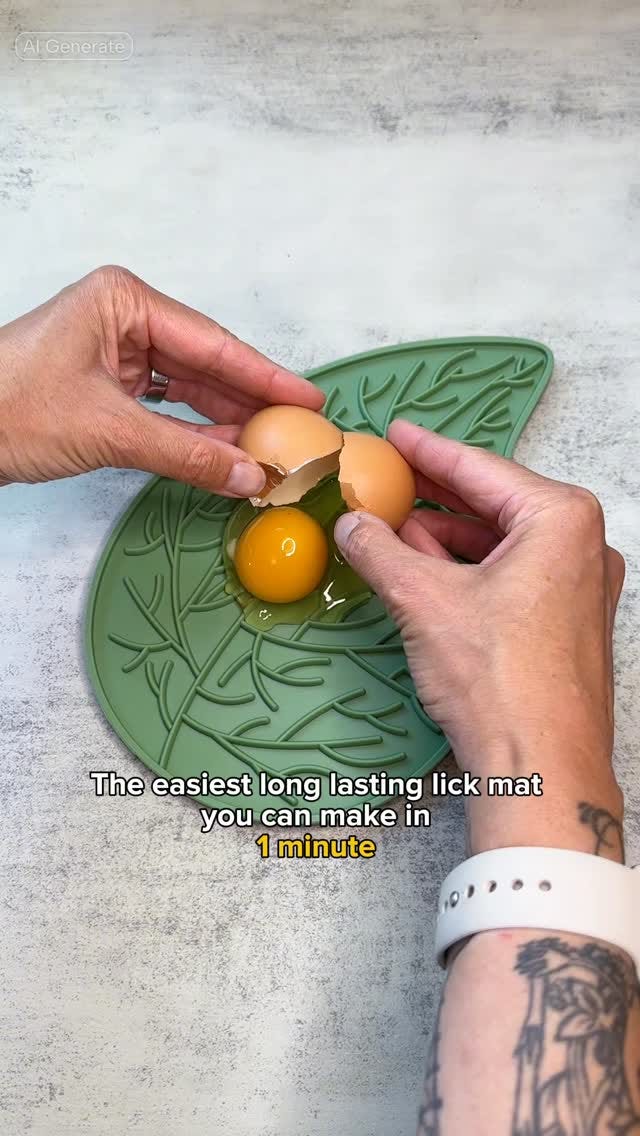
Lick Mat (with eggs!) - You can spread all kinds of things on these silicone mats (peanut butter, soft dog food, etc) and it is a time-consuming and soothing activity for your dog. You can also place them in the freezer to make it more difficult. One of our favorite ways to use them has been to make a scrambled egg on it as shown here:
📃 Create a Pet Sitting Guide
My last tip is to start a Google Doc that compiles information about your dog. This helps reduce the friction and work involved in getting pet care when you need it. It should include things like:
📞 Contact information for you, your usual vet, the emergency vet you prefer and a list of people who should be contacted if you are unavailable.
⏱️ Your dog’s typical schedule
🥩 Feeding amounts and times
⚕️Medications or allergies
🐕🦺 A list of your dogs tricks with the signal. Not just important for sitters to know, but also great for them to work on with your dog as an activity
🦴 A list of the treats, toys and activities that your dog enjoys
😫 A troubleshooting guide (ex. If the dog is doing _____, try ____)
🗺️ A map of your neighborhood with walking routes your dog loves, dog friendly businesses nearby (or places to avoid, etc.)
🏠 If they will be watching your pet in your home you might also want to include basic info for them (Wi-Fi password, access codes, where things are kept, etc.)
It’s great to compile this in a Google Doc, so it’s easy to access and edit over time — as your dog goes through different phases it becomes really helpful to have a guide you can share with your trusted dog sitters. I don’t know what I would have done without this for our first dog when he was sick and required constant care.
It doesn’t need to be fancy! It’s just great to have the information in a central place where you an easily update it and share it with people when needed.
Paying Subscribers can find a link at the bottom of this post to create a copy of my “Murphy Sitting Guide” in Google Docs and then edit it to include their own information and start a guide for their own pet.
Keep reading with a 7-day free trial
Subscribe to Thyme is Honey to keep reading this post and get 7 days of free access to the full post archives.